Can I Pay My Phone Bill with Bitcoin? 2026
Mar 12, 2026 · AppleBitcoin
Yes, You Can Pay Your Phone Bill With Bitcoin — Here Is the Complete Picture
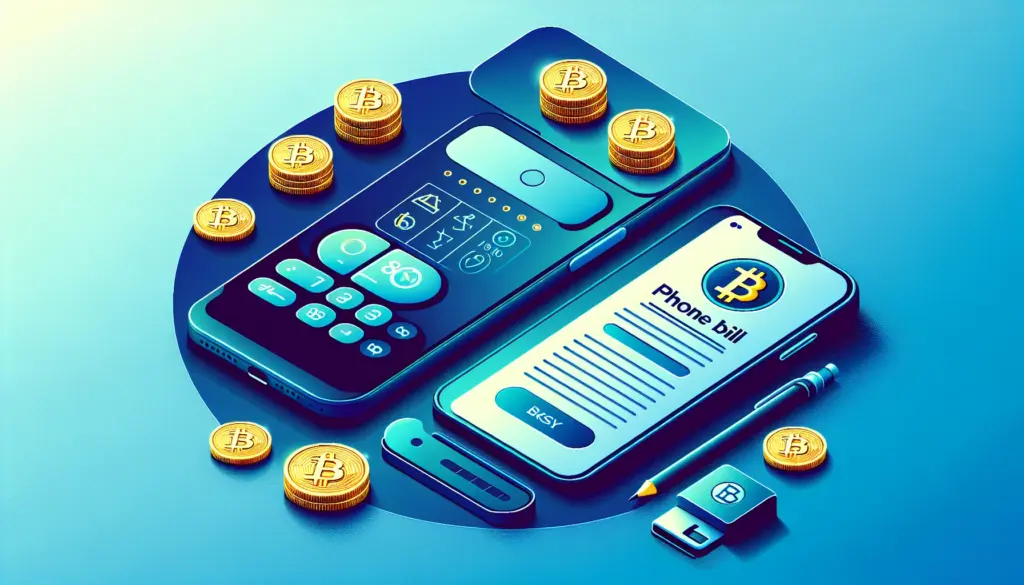
Paying your phone bill with Bitcoin is fully achievable in 2026, and the range of methods available has expanded well beyond the early workarounds of a few years ago. Whether you hold Bitcoin as a long-term investment and want to deploy it for everyday expenses, or you simply prefer crypto-native financial management for routine bills, the infrastructure to make it happen is reliable, fast, and globally accessible.
The important context to set immediately is that most major mobile carriers — Verizon, AT&T, T-Mobile in the United States, and comparable carriers internationally — do not accept Bitcoin directly at the payment portal. What the 2026 ecosystem provides instead is a well-developed layer of intermediary services that bridge the gap between your Bitcoin wallet and your carrier’s payment system. These services work through three main mechanisms: mobile top-up voucher platforms, crypto-funded prepaid debit cards, and in some markets, direct crypto-to-bill payment processors. Each approach has distinct trade-offs around convenience, fee structure, and carrier compatibility.
This guide covers every available method for paying your phone bill with Bitcoin in 2026, including detailed platform comparisons, step-by-step transaction processes, a comprehensive breakdown of costs, the challenges to anticipate and manage, and how the entire setup integrates with the Apple iOS ecosystem that most readers of AppleBitcoin are embedded in. By the end, you will have a complete, actionable picture of exactly how to route Bitcoin toward your monthly mobile bill.
What Are the Main Methods for Paying a Phone Bill With Bitcoin?
Three distinct methods currently support paying a phone bill with Bitcoin in 2026, and understanding each one’s mechanics before choosing helps ensure you pick the right approach for your carrier, country, and crypto preferences. The methods are not mutually exclusive — many crypto-native users combine two or three depending on the month’s circumstances.
Method 1: Mobile top-up platforms (Bitrefill, CoinGate, Coinsbee). These platforms operate by accepting your Bitcoin payment and delivering either a digital top-up voucher for your specific carrier or, where supported, applying a direct credit to your mobile account. You select your country, carrier, and top-up denomination; pay in Bitcoin; and receive a code that adds the corresponding credit to your phone account. This method is the most universally available and requires the least setup — no card application, no account linking. The trade-off is that it works most cleanly for prepaid plans and in markets with strong Bitrefill carrier coverage, and less smoothly for postpaid monthly billing where a direct bill payment is more appropriate than an account top-up.
Method 2: Bitcoin-funded prepaid debit cards (Fold, BitPay Mastercard, Crypto.com Visa). These products issue a Visa or Mastercard debit card that is funded with Bitcoin-converted balances. You load the card by converting Bitcoin to dollars (or your local currency) through the card platform’s app, and the resulting balance functions identically to any conventional prepaid debit card. Set the card as your carrier’s autopay method, and your monthly bill is charged to the card balance automatically. This approach is the most seamless for postpaid carriers with recurring monthly billing and works for every carrier that accepts Visa or Mastercard debit for autopayment — which covers virtually all carriers in developed markets.
Method 3: Stablecoin bill payment processors. Some bill payment services accept stablecoins — USDT, USDC, or DAI — for direct bill payments across utility and telecom categories. These services are most developed in markets like Brazil, Nigeria, and parts of Southeast Asia where crypto adoption for everyday payments is highest and traditional banking infrastructure is less reliable. For users who prefer to minimize exposure to Bitcoin’s price volatility at the moment of bill payment, converting BTC to USDC first and then using a stablecoin payment processor provides the predictability of fiat-equivalent payment with the payment-chain infrastructure of cryptocurrency.
Which Platforms Are Best for Paying a Phone Bill With Bitcoin?
The platform you choose determines your carrier coverage, fee structure, supported cryptocurrencies, and overall payment experience. Each major platform has specific strengths, and the right choice depends heavily on your carrier and geographic location.
Bitrefill is the market leader for Bitcoin mobile phone payments globally, offering mobile top-up and eSIM services for carriers in over 170 countries. The platform’s carrier database covers thousands of operators — from the largest national networks to regional prepaid-only carriers — making it the most likely single platform to support your specific carrier wherever you are located. Bitcoin, Ethereum, Litecoin, Monero, USDT, and Tron are accepted, with Monero integration being particularly notable for privacy-conscious users who want maximum transaction anonymity. Bitrefill does not require account registration for basic purchases, though creating a free account unlocks auto-recharge features useful for setting up automatic monthly payments. Processing is typically instant after one Bitcoin blockchain confirmation, which takes ten to thirty minutes under standard network conditions.
CoinGate provides strong carrier coverage in European markets and accepts over 70 cryptocurrencies — one of the broadest payment asset selections among major bill payment platforms. CoinGate’s checkout flow displays the exact cryptocurrency amount required for your selected bill value with a rate-lock window protecting you from price movement during payment. The platform’s European telecom partnerships make it particularly useful for users in the UK, Germany, France, Spain, Scandinavia, and Eastern Europe whose carriers may appear less prominently on Bitrefill’s inventory. CoinGate also provides a merchant API for businesses that want to accept crypto for telecom services, though most individual users will interact only with the consumer-facing top-up interface.
Coinsbee focuses on emerging market carrier coverage, with particularly strong operator networks in Africa, Latin America, Asia-Pacific, and the Middle East — regions where cryptocurrency adoption rates are often highest precisely because traditional banking infrastructure is less accessible. Bitcoin, Ethereum, Litecoin, Ripple, and several other assets are accepted. For users managing phone bills across multiple countries — expatriates, frequent travelers, or people maintaining international phone numbers — Coinsbee’s coverage of operators that other platforms miss makes it a valuable addition to the toolkit alongside Bitrefill.
Fold App takes a fundamentally different approach that is particularly well-suited to U.S. postpaid carrier users. Fold issues a Visa debit card that users fund by converting Bitcoin through the Fold app. The resulting dollar balance functions as a standard Visa debit that can be used for any purchase — including setting as the autopayment method for Verizon, AT&T, T-Mobile, or any other Visa-accepting carrier. Fold also offers Bitcoin cashback rewards on spending, meaning users who pay bills through the Fold Visa card earn small Bitcoin amounts back with each transaction, partially offsetting the conversion cost.
- Bitrefill: 170+ countries, 10+ cryptos, no account required, instant delivery, best global coverage
- CoinGate: 70+ cryptos, strong European carriers, rate-locked checkout, clean interface
- Coinsbee: Africa/LatAm/APAC focus, BTC/ETH/LTC/XRP, covers niche operators
- Fold App: Bitcoin-funded Visa debit, best for U.S. postpaid carriers, Bitcoin cashback rewards
- BitPay Mastercard: Bitcoin-to-Mastercard, works for any Mastercard-accepting carrier autopay
- Crypto.com Visa: Multiple crypto funding options, global Visa coverage, staking rewards available
How to Pay Your Phone Bill With Bitcoin: Step-by-Step Guide
The following step-by-step process covers the Bitrefill method — the most universally applicable approach for paying a phone bill with Bitcoin — in enough detail to execute from start to finish without confusion. Minor variations apply on other platforms but the core flow is identical.
Step 1 — Find your carrier on Bitrefill. Go to Bitrefill.com on your browser — this works equally well from your iPhone’s Safari or Chrome browser. Use the search bar on the homepage to search your country name or your mobile carrier’s name. Select your carrier from the results. You will see the available top-up denominations displayed in your local currency. If you pay a fixed monthly bill, select the denomination matching your bill amount. If you are topping up a prepaid account, select the amount you want to add.
Step 2 — Enter your phone number and review the transaction. Enter the phone number associated with the account you want to top up. Bitrefill displays a confirmation screen showing the carrier name, phone number, credit amount, and the Bitcoin equivalent at the current rate. Review every detail carefully before proceeding — particularly the recipient phone number. Misdirected top-up payments are not reversible through any technical means, and carrier credits applied to a wrong number cannot be recalled. Take thirty seconds to verify accuracy at this step.
Step 3 — Select Bitcoin as your payment method. At the payment screen, select Bitcoin. Consider current network conditions before committing — if you check a Bitcoin fee estimator (mempool.space is the most reliable real-time tool) and see that fees are elevated due to congestion, Litecoin or Monero through the same platform provide faster confirmation and lower network fees. If you use Monero for privacy reasons, Bitrefill’s XMR acceptance makes this the cleanest privacy-preserving phone bill payment option available anywhere.
Step 4 — Send the exact Bitcoin amount within the payment window. Bitrefill generates a unique Bitcoin payment address and displays the exact BTC amount required, locked at the current exchange rate for fifteen minutes. Open your Bitcoin wallet — hardware wallet, software wallet, or exchange app — and send exactly the displayed amount to the generated address. Set your transaction fee at least at the current recommended level to ensure the transaction reaches one confirmation within the fifteen-minute window. Sending immediately minimizes the risk of any rate lock expiry complications.
Step 5 — Receive confirmation and verify carrier credit. After your Bitcoin transaction receives one blockchain confirmation — typically ten to thirty minutes — Bitrefill processes your top-up and the carrier credit is applied to your account. You will receive an email confirmation from Bitrefill and, depending on your carrier, an SMS notification confirming the credit addition. Check your carrier’s app or account portal to verify the credit appears. If the credit does not show within thirty minutes of Bitrefill’s confirmation email, contact Bitrefill support with your order ID — delivery failures are rare but handled promptly by their support team.
What Does It Cost to Pay a Phone Bill With Bitcoin?
Understanding the true total cost of paying your phone bill with Bitcoin — across all fee layers — prevents surprise costs and allows accurate comparison against conventional payment methods. Three cost components combine to determine your total outlay above the face value of the bill.
Platform service fees are built into the exchange rate displayed by most platforms rather than charged as a transparent separate line item. Bitrefill’s effective service fee runs approximately 1.5–3% of the top-up value, varying by carrier and country. CoinGate’s fee structure is broadly comparable. These fees reflect the operational costs of the carrier payment integration, currency conversion, and platform infrastructure. On a $50 monthly phone bill, this represents an additional $0.75–$1.50 — modest in absolute terms and well below the $15–$35 international wire transfer fees that apply when trying to pay cross-border bills through traditional banking channels.
Bitcoin network transaction fees add a variable cost that depends entirely on current Bitcoin mempool activity. During periods of low network utilization, sending Bitcoin costs $0.50–$2.00 in miner fees. During peak congestion — historically associated with major Bitcoin price events and bull market periods — fees can spike to $15–$30 for standard-priority transactions. Checking mempool.space before initiating a bill payment takes thirty seconds and allows you to make an informed decision about whether to proceed with Bitcoin immediately, wait for lower fees, or switch to Litecoin for this particular payment. Litecoin network fees are consistently below $0.05 regardless of network conditions, making it the cost-optimal choice for regular bill payments where timing flexibility exists.
Exchange rate timing is not a fee per se but represents a real economic variable. The BTC amount required to cover a $50 phone bill is significantly different when Bitcoin is at $80,000 versus $50,000. For long-term Bitcoin holders, this translates to spending fewer satoshis at higher BTC prices — a consideration that some holders weigh when deciding whether to pay bills in Bitcoin or convert to fiat first. Stablecoin payment options (paying with USDC or USDT through CoinGate or similar platforms) eliminate this variable by denominating the payment in a fiat-pegged asset regardless of Bitcoin price action at the moment of payment.
Total cost summary for a $50 U.S. phone bill paid with Bitcoin via Bitrefill (2026 estimates): Platform fee: ~$0.75–$1.50 | Bitcoin network fee: $0.50–$5.00 (variable) | Total overhead: $1.25–$6.50. For comparison: international wire transfer: $15–$35 | Domestic card payment: $0 (no additional cost). Bitcoin is cost-competitive for international bill payments and carries a modest overhead versus zero-fee domestic card payments.
What Are the Challenges of Paying a Phone Bill With Bitcoin?
A balanced, honest assessment of the challenges involved in paying your phone bill with Bitcoin ensures you go in with realistic expectations rather than encountering surprises that disrupt your monthly bill cycle. Several challenges deserve specific attention and corresponding mitigation strategies.
Bitcoin price volatility creating uncertain BTC amounts is the most commonly cited challenge. Because your phone bill is denominated in fiat currency and Bitcoin’s price changes continuously, the BTC amount required to cover a $50 bill changes from hour to hour. On the day you pay, $50 might require 0.00063 BTC; the following week it might require 0.00058 BTC if Bitcoin has risen. Bitrefill’s rate-locking mechanism handles this at the transaction level — once you initiate checkout, the rate is fixed for fifteen minutes — but the underlying variability means you cannot pre-calculate a fixed monthly Bitcoin budget for bill payment the way you can with fiat. Practical mitigation: check the rate shortly before initiating payment rather than planning it hours in advance, and consider using stablecoins for the final payment step to eliminate intra-day Bitcoin price exposure entirely.
Carrier coverage gaps affect users whose specific mobile operator is not represented in Bitrefill’s or CoinGate’s inventory. While coverage is excellent in the United States, Western Europe, and major Asian markets, some regional carriers and mobile virtual network operators (MVNOs) are absent from current platform databases. The workaround for any carrier gap is the crypto-funded debit card approach: any carrier that accepts Visa or Mastercard for bill payment can be reached through a Bitcoin-funded Fold, BitPay, or Crypto.com card, making the workaround nearly universal for carriers in developed markets even when direct top-up coverage is unavailable.
Tax record-keeping burden scales with the frequency of Bitcoin spending. In the United States, every Bitcoin transaction for goods or services — including a monthly phone bill — is a taxable disposal event if the spent Bitcoin has appreciated in value since acquisition. Twelve monthly phone bill payments create twelve individual capital gain calculations per year, each requiring records of acquisition date, cost basis, spending date, and fair market value at spending. Over two to three years of monthly payments, this creates a meaningful record-keeping obligation. The practical solution is using a crypto tax tracking tool — Koinly, CoinTracker, or TaxBit — that automatically imports wallet transaction history and calculates gains, reducing the manual burden to a near-zero ongoing time investment.
How Does Bitcoin Phone Bill Payment Work With the Apple Ecosystem?
For iPhone users who are already immersed in Apple’s ecosystem, the question of paying a phone bill with Bitcoin connects naturally to the broader topic of how cryptocurrency integrates with iOS, Apple Pay, and the Apple hardware and services experience. The integration landscape in 2026 is more mature than most users realize.
The Apple App Store hosts a comprehensive selection of Bitcoin and cryptocurrency wallet applications that provide full send-and-receive functionality optimized for iPhone’s hardware and iOS design language. Blue Wallet, Trust Wallet, Exodus, and Muun Wallet are among the most polished iOS Bitcoin wallet experiences available, all of which support the direct Bitcoin payment required for Bitrefill transactions. The entire phone bill payment process — checking your Bitcoin balance, estimating network fees, scanning the Bitrefill payment QR code, initiating the transaction, and monitoring blockchain confirmation — can be completed entirely within native iOS applications without switching to desktop or using any non-Apple hardware beyond an optional hardware wallet for key security.
Apple Pay and Bitcoin remain technically incompatible as of 2026 — Apple Pay operates through tokenized card credentials backed by bank accounts or payment cards, not cryptocurrency wallets. However, the practical gap is bridged effectively through crypto-funded Visa and Mastercard products. When you load your Fold Visa or BitPay Mastercard with Bitcoin-converted funds and add the card to Apple Wallet, the card becomes fully available for Apple Pay transactions — including mobile carrier app payments where the carrier’s iOS app supports Apple Pay checkout. This indirect pathway puts Bitcoin-funded money inside the Apple Pay ecosystem with no user-visible friction after the initial setup.
For iPhone users who want to purchase Apple products — upgrading to a new iPhone, buying Apple Watch, or adding AirPods — directly with Bitcoin, AppleBitcoin provides the most streamlined dedicated platform. Accepting over 50 cryptocurrencies for the full Apple product lineup with no account creation required, worldwide shipping, and factory-sealed warranty-covered products, AppleBitcoin extends the Bitcoin-native Apple experience from monthly service bills to hardware acquisition. Combined with Bitrefill for carrier bill payments, an iPhone user can manage both the hardware and service dimensions of their mobile life entirely within the cryptocurrency ecosystem.
How to Set Up Automatic Monthly Phone Bill Payment With Bitcoin
Moving beyond one-time Bitcoin phone bill payments to a smooth, recurring monthly system requires slightly more setup but delivers ongoing convenience that makes crypto bill payment genuinely practical rather than a monthly manual exercise. The following framework creates a reliable automated system using 2026’s available infrastructure.
The most reliable automation pathway for U.S. users is the crypto-funded debit card approach. Download the Fold App or the BitPay app on your iPhone and complete the card application — this requires standard identity verification similar to opening a bank account, which is the privacy trade-off of the debit card approach. Once approved and card delivered, load the card by converting Bitcoin to dollars through the app. Navigate to your carrier’s app or website, add your Fold Visa or BitPay Mastercard as a payment method, and enable autopay. Each month, ensure sufficient fiat balance is loaded to the card before your billing date. Some users load a quarter’s worth of bill funds at once during favorable Bitcoin exchange rate periods, effectively timing their Bitcoin-to-fiat conversion for moments when BTC is strong.
For users who prefer to stay in Bitcoin rather than pre-converting to fiat, Bitrefill’s recurring top-up feature provides a middle ground for compatible carriers. After creating a free Bitrefill account, you can set up scheduled automatic top-ups on monthly intervals for your carrier and amount. The platform sends a payment reminder email at the scheduled interval prompting you to send Bitcoin for the upcoming top-up, keeping the process semi-automated while maintaining your Bitcoin wallet as the funding source rather than a pre-loaded fiat card balance. This approach suits prepaid carrier users who add monthly data or talk credits rather than paying a postpaid invoice.
Frequently Asked Questions: Paying Your Phone Bill With Bitcoin
Q: Can I pay my phone bill with Bitcoin in 2026?
Yes. While most major carriers do not accept Bitcoin directly, you can effectively pay any phone bill with Bitcoin through intermediary platforms. Bitrefill supports mobile top-ups in 170+ countries for thousands of carriers using Bitcoin and other cryptocurrencies. For postpaid U.S. carriers like Verizon, AT&T, and T-Mobile, Bitcoin-funded Visa debit cards from Fold or BitPay can be set as your carrier autopay method, routing Bitcoin-converted funds to your bill seamlessly every month.
Q: Which platform is best for paying a phone bill with Bitcoin?
Bitrefill is the most recommended platform for most users, offering the widest global carrier coverage (170+ countries), support for Bitcoin, Litecoin, Monero, and other cryptos, near-instant delivery after confirmation, and no mandatory account registration. For European users, CoinGate provides strong alternative coverage. For U.S. postpaid carrier users, a Bitcoin-funded Fold Visa card set as carrier autopay is the most seamless recurring solution. Check Bitrefill first for your carrier, then consider CoinGate or Coinsbee if your specific carrier is not listed.
Q: Are there fees when paying a phone bill with Bitcoin?
Yes — two main fees apply. Platform service fees of approximately 1.5–3% are built into the exchange rate on most top-up platforms, adding $0.75–$1.50 on a $50 bill. Bitcoin network transaction fees are variable — typically $0.50–$3.00 during normal conditions but potentially $15–$30 during peak network congestion. Using Litecoin instead of Bitcoin reduces network fees to under $0.05 per transaction regardless of conditions. Total additional cost for a typical $50 bill paid with Bitcoin runs $1.25–$6.50 above face value — competitive with international wire transfer fees and a modest premium over zero-fee domestic card payments.
Q: Does paying a phone bill with Bitcoin require revealing my identity?
It depends on the platform and method. Bitrefill allows purchases without creating an account, requiring only an email for voucher delivery — a relatively minimal data footprint. Using Monero (XMR) on Bitrefill instead of Bitcoin provides additional transaction privacy at the blockchain level, as Monero transactions are private by default. The crypto-funded debit card approach (Fold, BitPay) requires full identity verification during card application, similar to a bank account opening, which is the significant privacy trade-off of that method. For maximum privacy in phone bill payment, the Bitrefill plus Monero combination provides the cleanest pathway.
Q: Is there a tax implication when using Bitcoin to pay my phone bill?
In the United States and most major jurisdictions, yes. The IRS treats Bitcoin as property, meaning spending appreciated Bitcoin on any purchase — including a phone bill — triggers a taxable disposal event. If you bought Bitcoin at $30,000 and spend some when it is worth $90,000, the gain is taxable as capital gain income. Monthly phone bill payments create twelve taxable events per year requiring records of acquisition cost basis and spending fair market value. Use a crypto tax tool like Koinly or CoinTracker to automate tracking, and consult a tax professional if you are making frequent Bitcoin payments for ongoing expenses throughout the year.
Related Articles
Ready to buy Apple with crypto?
Genuine, sealed Apple products. Pay in Bitcoin, Ethereum or stablecoins.
Shop now